
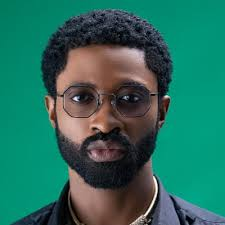
There is a particular kind of Nigerian artist who built a career not on viral noise but on consistency, and Ric Hassani belongs firmly in that category. Long before “Afrobeats” became a global marketing term, Hassani was quietly fusing soul, R&B and Afro-pop into something distinctly his own, earning the nickname “The African Gentleman” along the way. Today, he is as recognisable for his tailored suits and old-school charm as he is for hits like “Gentleman” and “Only You” and more recently, for his seat on the judging panel of Nigerian Idol. His story is a useful reminder that not every successful career in Nigerian music starts with a viral moment; some are built slowly, on craft.
Ric Hassani Biography
| Full Name | Ikechukwu Eric Ahiauzu |
| Stage Name | Ric Hassani (also known as Rico Slim) |
| Date of Birth | 6 January 1989 |
| Place of Birth | Port Harcourt, Rivers State, Nigeria |
| Nationality | Nigerian |
| Ethnicity | Ogba (Rivers State) |
| Occupation | Singer, songwriter, recording artist |
| Education | Covenant University; University of Surrey, UK (MSc, Energy Economics) |
| Known For | “Gentleman,” “Only You,” judging on Nigerian Idol |
Early Life and Background
Ric Hassani was born Ikechukwu Eric Ahiauzu on 6 January 1989 in Port Harcourt, the capital of Rivers State, though his family roots trace back to Omoku in the Ogba/Egbema/Ndoni area of the state. He grew up the only son in a household full of music, even if it wasn’t the kind he would eventually become known for. His father was fond of classical highlife records, and his sisters sang in the choir of their local Anglican church. As a boy, Hassani would tag along to choir rehearsals, less out of devotion to music at first and more, by his own admission, for the snacks that were shared afterward. It is a small, human detail, but it captures something real about how artists are often shaped: not by grand decisions, but by ordinary exposure that slowly becomes identity.
What is also worth noting is the academic pedigree of his household. Both of his parents held professorial positions, which meant that a career in entertainment was not an obvious or easily accepted path. Convincing two professors that their only son wanted to pursue music professionally was, by several accounts, one of the harder negotiations of his early adulthood.
Education
Hassani did not abandon academics for music; he pursued both in parallel for years. He studied at Covenant University in Ogun State, Nigeria, before travelling to the United Kingdom, where he earned a master’s degree in Energy Economics from the University of Surrey. It is an unusual academic background for a soul and R&B artist, and it says something about his temperament — methodical, patient, willing to finish what he starts even while chasing a separate, riskier ambition on the side.
Career Journey
Hassani’s earliest attempt at a music career did not even begin in the genre he is now known for. Around 2008, he experimented with rap before realising that singing, not rapping, was where his voice actually belonged. The shift came into focus in 2012, when he released his debut single, “Dance Dance Baby Dance,” followed soon after by “Double Double.” Neither track made him a household name, but both served their purpose: they put him on the radar of an industry that rewards persistence as much as talent.
The real turning point arrived in September 2015, when Hassani became the first Nigerian artist to headline the Lake of Stars Festival in Malawi, performing alongside acts like Uhuru and Toya Delazy. That same year, he released a compilation, “African Tour Select Singles 2015,” and an acoustic EP featuring stripped-down versions of fan favourites. Then, in December 2015, came “Gentleman” — a song that would eventually define his public image. Built around themes of respect, romance and old-fashioned chivalry, the single became the lead track for his debut studio album, “The African Gentleman,” released in July 2017.
The album did more than introduce a new artist; it introduced a persona. Hassani’s image — sharp suits, courteous lyrics, a deliberate throwback to an earlier era of romance — became inseparable from his music. The standout track “Only You” went on to be streamed more than 42 million times across platforms, cementing his place among Nigeria’s notable R&B voices. He followed it up with a sophomore album, “The Prince I Became,” in 2021, which featured collaborations with artists including Nicky Jam, Sauti Sol and Peruzzi — a sign that his appeal extended beyond Nigeria’s borders.
Not every chapter of his career has been free of friction. In 2021, Nigeria’s National Broadcasting Commission barred his single “Thunder Fire You” from radio airplay, a decision that drew attention to the sometimes unpredictable relationship between Nigerian artists and the country’s broadcasting regulators. Hassani continued releasing music regardless, putting out “Amina” and “The One” in April 2023.
In April 2024, his career took an unexpected but fitting turn when he was announced as a judge on Season 9 of Nigerian Idol, joining fellow musicians Omawumi and 9ice on the panel. The role suited him: a decade into his career, Hassani had become exactly the kind of steady, articulate voice a singing competition needs on its judging table, and he has continued in that role in subsequent seasons.
Influence and Style
What sets Hassani apart from many of his contemporaries is restraint. In an industry often driven by loud, maximalist production, his music leans on melody, vocal control and lyrical sincerity. He has cited Sam Smith, Craig David and Boyz II Men as influences, and that lineage is audible — his songs favour emotional clarity over spectacle. His “gentleman” branding, while a marketing device, also reflects a genuine artistic choice to occupy a calmer, more romantic lane within Nigerian pop music, one that has aged well as audiences increasingly look for variety beyond uptempo Afrobeats.
Personal Life
Hassani has kept the details of his romantic life largely out of the public eye. Public records do not confirm a marriage, and there is no verified information about children. What is well documented is his family background an academic household with a strong religious upbringing in the Anglican church and the closeness he has described with his sisters growing up.
Net Worth
Various entertainment outlets have published estimates of Ric Hassani’s net worth ranging anywhere from roughly $300,000 to figures closer to $800,000, but none of these numbers have been independently verified or confirmed by Hassani himself. What can be said with more confidence is the source of his income: album and single sales, streaming royalties, live performances, brand partnerships — including a notable endorsement deal with Giorgio Armani’s Acqua di Giò fragrance as one of its first African ambassadors — and, more recently, his fee as a Nigerian Idol judge.
Conclusion
Ric Hassani’s career resists the easy, fast-track narrative that defines a lot of music journalism today. He did not arrive with a single viral smash; he built an identity, refined it over a decade, and let his music — not controversy — do most of the talking. Whether he is remembered primarily for “Gentleman,” for his Armani campaign, or for his current role shaping the next generation of Nigerian singers from behind the Nigerian Idol judging desk, his trajectory is a study in patience paying off in an industry not always known for rewarding it.
Frequently Asked Questions
What is Ric Hassani’s real name?
His real name is Ikechukwu Eric Ahiauzu.
Where is Ric Hassani from?
He was born in Port Harcourt, Rivers State, and hails from Omoku in the Ogba/Egbema/Ndoni Local Government Area of the same state.
What is Ric Hassani best known for?
He is best known for songs like “Gentleman” and “Only You,” and more recently for serving as a judge on Nigerian Idol.
Did Ric Hassani study music in school?
No. He studied at Covenant University and later earned a master’s degree in Energy Economics from the University of Surrey in the UK.
Is Ric Hassani married?
There is no publicly confirmed information about a marriage; he has kept that part of his life private.
Leave a Reply