
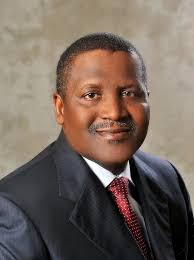
For over a decade, Aliko Dangote has held a position that no other African has ever occupied for so long: the wealthiest person on the continent. His fortune, built primarily through cement, sugar, flour, and now oil refining, dwarfs the GDP of several African nations. But reducing his story to wealth figures misses the essential point of what makes Dangote significant. He is not simply rich — he is a builder, in the most literal sense, of industrial infrastructure that Africa desperately needs.
Aliko Dangote was born on April 10, 1957, in Kano, in northern Nigeria. He came from a prominent Muslim Hausa-Fulani family with deep roots in commerce — his great-grandfather, Alhassan Dantata, was one of the wealthiest Africans of his time, a groundnut and kola nut trader who built a business network across West Africa. Dangote did not start from nothing. But what he built on that foundation is entirely his own achievement.
Aliko Dangote Biography
| Full Name | Aliko Dangote |
|---|---|
| Date of Birth | April 10, 1957 |
| Age | 67 years old (as of 2024) |
| Nationality | Nigerian |
| Ethnicity | Hausa-Fulani |
| Religion | Islam |
| Occupation | Businessman, Industrialist |
| Known For | Dangote Group; Africa’s richest person |
Early Life and Background
Dangote was raised in Kano, the commercial heartbeat of northern Nigeria. His father, Mohammed Dangote, died when Aliko was still a child, and he was largely raised by his maternal grandfather, Sanusi Dantata — himself a successful businessman. Growing up in a household shaped by commerce gave young Dangote an early intuition about trade, profit, and the mechanics of business.
By the time he was a teenager, he was already demonstrating the entrepreneurial instinct that would define his life. He famously borrowed money from his grandfather to buy sweets and resell them at school — a story he has recounted many times, often cited as the moment he discovered that trading was in his blood.
Education
Dangote attended the Sheikh Ali Kumasi Madrasa and Capital High School in Kano before pursuing higher education. He studied Business Studies and Administration at Al-Azhar University in Cairo, Egypt — one of the world’s oldest and most prestigious Islamic universities. He graduated in 1977 and returned to Nigeria with a clear vision of what he wanted to build.
Career Journey
At the age of 21, with a loan of 500,000 naira from his uncle, Dangote founded the Dangote Group in 1977 as a commodities trading company, initially dealing in rice, sugar, flour, and other staples. The timing was fortunate — Nigeria’s post-civil war oil boom was creating enormous consumer demand, and the country needed reliable supply chains. Dangote positioned himself as a key intermediary.
Through the 1980s and 1990s, as Nigeria navigated economic turbulence, Dangote grew his trading operations and began looking toward manufacturing. The pivot from trading to manufacturing was the most consequential decision of his career. Rather than importing cement, sugar, or flour and selling it, he began producing these commodities domestically. This vertical integration strategy — controlling the supply chain from raw material to finished product — is what transformed a wealthy trader into Africa’s dominant industrialist.
Dangote Cement is the crown jewel of his empire. With production capacity across multiple African countries, it is the largest cement producer in sub-Saharan Africa. The Dangote Cement plant in Obajana, Kogi State, is one of the largest cement plants in the world. His sugar and flour operations similarly dominate their respective Nigerian markets.
His most ambitious project — the Dangote Petroleum Refinery and Petrochemicals, located in the Lekki Free Zone near Lagos — is a $19 billion undertaking that, when fully operational, will be one of the world’s largest single-train refineries. Nigeria, despite being one of Africa’s largest oil producers, has for decades imported virtually all its refined petroleum due to the decay of state-owned refineries. Dangote’s refinery is designed to change that — producing fuel domestically and potentially transforming Nigeria’s energy economics. The project, years in the making, began operations in 2023 and 2024.
Business Philosophy and Influence
Dangote’s approach to business is rooted in scale and patience. He invests in capital-intensive sectors that require long lead times but produce durable competitive advantages — it takes a rival years and billions of dollars to build a competing cement or refinery capacity. This strategy has made him difficult to displace in each market he enters.
He is also known for his relationships with Nigerian governments across political cycles, which has helped him navigate regulatory environments that can be opaque and difficult for foreign investors. Critics have occasionally raised questions about the proximity of his business interests to government policy — his cement business, for example, benefited from import restrictions on foreign cement. His defenders argue that he is simply doing what any intelligent industrialist does: aligning business with national development priorities.
Personal Life
Dangote has been divorced and is the father of three daughters — Halima, Mariya, and Fatima — all of whom have taken on roles within the Dangote Group or its related entities. He is known to keep his personal life relatively private, though he occasionally appears at high-profile social events. He is a practising Muslim and has made significant charitable contributions to Islamic causes and broader humanitarian initiatives in Nigeria.
Net Worth
Dangote’s net worth fluctuates with the performance of Dangote Cement and other publicly listed entities. At his peak, Forbes estimated his fortune at over $25 billion, making him one of the wealthiest people in the world. As of recent years, his net worth has been in the range of $12–20 billion depending on market conditions and the progress of his refinery project. He remains Africa’s richest person.
Legacy
The Dangote story is ultimately about what African-led industrialization can look like when it is given the right combination of capital, vision, and patience. Whatever one thinks of his methods or his proximity to political power, the physical infrastructure he has built — the factories, the refineries, the silos, the plants — represent a kind of commitment to African industrial sovereignty that few individuals anywhere in the world have matched in scale.
Frequently Asked Questions
How did Aliko Dangote make his money?
He built his wealth primarily through the Dangote Group, which dominates cement, sugar, and flour production in Nigeria and operates across multiple African countries. His Lekki-based oil refinery is the most recent and largest addition to his business empire.
Where did Aliko Dangote study?
He studied Business Studies and Administration at Al-Azhar University in Cairo, Egypt.
Is Aliko Dangote the richest person in Africa?
Yes, he has consistently been ranked as the wealthiest person in Africa by Forbes and other financial publications for well over a decade.
What is the Dangote Refinery?
The Dangote Petroleum Refinery is a $19 billion oil refinery located in the Lekki Free Zone, Lagos. It is designed to be one of the world’s largest single-train refineries and aims to end Nigeria’s dependence on imported refined petroleum products.
How many children does Aliko Dangote have?
He has three daughters: Halima, Mariya, and Fatima Dangote.
Leave a Reply