
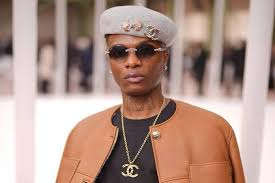
When a song called “Essence” — a shimmering, sensual Afrobeats track featuring Tems — spent weeks on the Billboard Hot 100 in 2021, it was not just a chart placement. It was confirmation of something that a generation of Nigerian music fans had always believed: that Afrobeats, their music, made in Lagos studios, was genuinely universal. And the man at the center of that moment, as he has been at the center of so many such moments across fifteen years, was Ayodeji Ibrahim Balogun — known to the world as Wizkid.
Wizkid is not simply Nigeria’s most internationally successful recording artist. He is an architect of the global Afrobeats phenomenon. His collaborations with Drake, Beyoncé, Justin Bieber, and Chris Brown introduced Nigerian music to audiences who had never heard it before. His own catalogue — spanning multiple studios albums, hit singles, and record-breaking tours — represents one of the most consistent bodies of work in African popular music history
Wizkid Biography
| Full Name | Ayodeji Ibrahim Balogun |
|---|---|
| Date of Birth | July 16, 1990 |
| Age | 33 years old (as of 2024) |
| Nationality | Nigerian |
| Ethnicity | Yoruba |
| Height | 5 ft 6 in (1.67 m) |
| Occupation | Singer, Songwriter, Record Producer |
| Parents | John Balogun (father), Grace Balogun (mother) |
| Children | 3 (Boluwatife, Ayodeji Jr., Zion) |
| Known For | “Essence,” “Come Closer,” Starboy Records; collaboration with Drake and Beyoncé |
Early Life and Background
Wizkid was born on July 16, 1990, in Surulere, Lagos — a middle-class Lagos neighborhood that was then, and remains today, a cradle of Nigerian music talent. His father, John Balogun, was a Muslim man who worked in retail, and his mother, Grace Balogun, was a Christian. Growing up in a household that bridged two of Nigeria’s most practised faiths gave Wizkid an early lesson in coexistence, and both traditions shaped aspects of his personality and music.
He was raised in a compound with multiple siblings and half-siblings — he has often mentioned growing up surrounded by children from various parts of his family. Music was everywhere in his environment. Lagos is one of the most musically active cities in the world, and in the 1990s and early 2000s, the streets of Surulere were full of the sounds of jùjú, fuji, highlife, and the emerging new wave of Nigerian pop that would eventually become Afrobeats.
He began singing and recording at the age of 11, using a basic home recording setup. By age 15, he had collaborated on a gospel album — a detail that speaks to how early his musical seriousness manifested, and also to the Christian influence of his mother’s side of the family. He attended Surulere’s Lagos State Model College and later briefly enrolled at Lead City University in Ibadan, though his music career quickly overtook his academic pursuits.
Career Journey
Wizkid’s career breakthrough came through Banky W’s Empire Mates Entertainment (EME), which he signed to in 2009. Under EME, he released his debut album, “Superstar” (2011), which became one of the most commercially successful debut albums in Nigerian music history. The record produced multiple hit singles and established Wizkid as the defining voice of a new generation of Nigerian pop artists.
The pivotal moment in his global crossover came in 2016, when he was featured on Drake’s viral hit “One Dance” — a song that became the first in Spotify history to reach one billion streams, and which topped charts in multiple countries simultaneously. The song introduced Wizkid to a mainstream global audience of hundreds of millions. He also appeared on Beyoncé’s acclaimed visual album “Lemonade” and collaborated with her on “Brown Skin Girl” from “The Lion King: The Gift” album in 2019 — a song that subsequently won a Grammy for Best Music Video.
His own albums — “Ayo” (2014), “Sounds From the Other Side” (2017), and “Made in Lagos” (2020) — traced a clear arc of artistic maturation. “Made in Lagos” is widely considered his masterpiece: a cohesive, luminous album that distilled the sound and spirit of Lagos into something universally accessible. It produced “Essence” (featuring Tems), which became the biggest Afrobeats crossover hit of its era.
He founded Starboy Records and established the Starboy brand as both a musical movement and a lifestyle identity. His business acumen extends beyond music: he has endorsements with brands including Nike, TECNO, and Balmain.
Influence and Contributions
Wizkid’s contribution to the global spread of Afrobeats is foundational. Before him, Nigerian music had regional and diaspora appeal — after him, it became a genuine global force. His collaborations with top-tier Western artists helped legitimize Afrobeats in industry circles that had previously treated African music as a niche curiosity. His commercial success demonstrated to labels, streaming platforms, and venues that African artists could headline global tours, top global charts, and command genuine international respect.
Personal Life
Wizkid has three sons: Boluwatife, his eldest; Ayodeji Jr.; and Zion Ayo Balogun. His sons are from different relationships, and he has spoken about fatherhood being a significant part of his identity. His relationship with Jada Pollock, his longtime manager and the mother of his youngest son Zion, has been one of the more publicly discussed aspects of his personal life. He keeps much of his romantic life guarded, though his children appear occasionally in his social media posts.
Net Worth
Wizkid’s net worth is estimated in the range of $20–30 million, derived from streaming royalties, touring, endorsements, and his Starboy Records label. These are estimates — his actual financial situation has not been publicly confirmed in detail. He is broadly considered one of the wealthiest African music artists in the world.
Legacy
Wizkid’s legacy is that of the artist who made Afrobeats undeniable to the world. He did not start the genre — that history is longer and more complex. But he carried it to places it had never been before, and he did so with a consistency, artistic quality, and personal charisma that made his music feel inevitable rather than accidental. The genre will long outlast him, and when its history is written, his name will be near the very top.
Frequently Asked Questions
What is Wizkid’s real name?
His real name is Ayodeji Ibrahim Balogun, born on July 16, 1990, in Surulere, Lagos, Nigeria.
How tall is Wizkid?
Wizkid stands at approximately 5 feet 6 inches (1.67 meters) tall.
How many children does Wizkid have?
He has three sons — Boluwatife, Ayodeji Jr., and Zion — from different relationships.
What is Wizkid’s most successful song globally?
“Essence” featuring Tems is widely considered his biggest global hit, spending weeks on the Billboard Hot 100 and becoming the defining Afrobeats crossover moment of the early 2020s.
What Grammy did Wizkid win?
He won the Grammy Award for Best Music Video for “Brown Skin Girl,” which he recorded with Beyoncé, Blue Ivy Carter, and SAINt JHN for the 2019 project “The Lion King: The Gift.”
Leave a Reply